Primary Care Intelligence
Primary Care Intelligence prepares a prioritized view of each patient before the visit and answers clinical questions during it. It draws on structured and unstructured information from over 10 sources, accounts for payer rules, formulary and your own pathways, and cites each answer to its source. At Presbyterian, clinicians reported saving 1 to 2 hours per day.
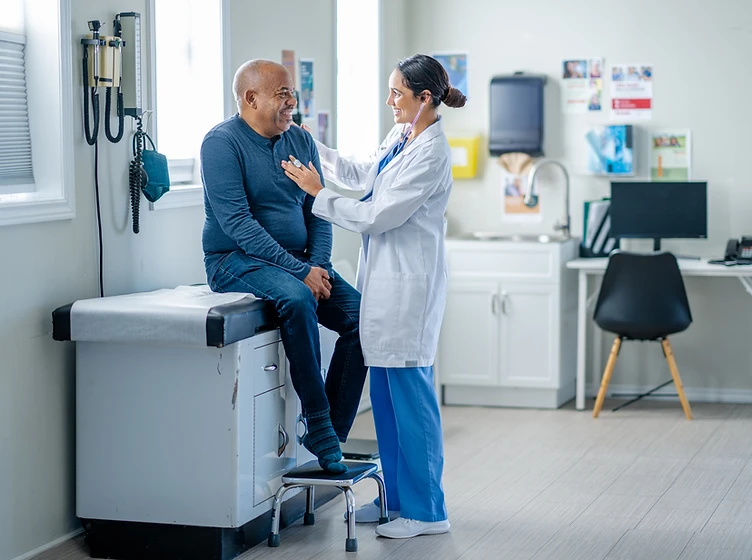
A prepared visit, and answers during it
12 yrs
of history
340
notes, labs, scans
3 min
time to prep
Likely missed in the time available
- Outside cardiology note unread
- CKD not coded
Includes 5 outside records from other settings.
Before each scheduled visit, Primary Care Intelligence assembles a concise, prioritized view of the patient and the actions worth considering, drawing on the systems that hold relevant data. During the visit, a clinician can question the assembled record and get answers drawn from the longitudinal picture and the encounter in progress, each cited to the source. Recommendations account for the patient's payer rules, the formulary and your own pathways and quality programs, so what is suggested is something the patient can get.
How the visit is prepared
Guidance before, during and after the visit
A physician or an APP can work a complex problem through in the room, with cited answers from the patient's record.
Recommendations you can act on here
Payer rules, formulary, local pathways and priority quality programs are configured into the delivered solution.
Governed before clinicians see it
More than 50 board-certified physicians review releases before they reach a live clinical environment, and recommendations are cited to the source record and the guidelines behind them.
Follow one visit
Step through the visit to see what the clinician has at each point.
A prioritized view, ready
A concise, prioritized view of the patient and the actions worth considering, assembled across every system holding relevant data.
Open care gap
Condition to review
Recent outside result
Medication change
Use cases
Pre-visit chart summarization
Care gap and condition capture at the visit
In-visit clinical questions and answers
Measured outcomes
At Presbyterian, clinicians reported saving 1 to 2 hours per day. Care Intelligence use cases go live in weeks.
Built for primary care physicians, APPs, nurses, and the population health and quality teams accountable for gap closure.
1 to 2 hours
saved per clinician per day
Presbyterian
Primary care clinicians using visit preparation

Start with your priorities
We'll tailor the session to your priorities and show you the use cases most likely to move the KPIs you're accountable for.
Request a demo